
The platform
Ovi · the built-in AI assistant
SIGA One
One system of record for the entire institution — planning, budget, accounting, treasury, procurement, assets, people, projects and revenue — configured to your sector and your jurisdiction rather than rebuilt for them.
The assistant
Ovi — the assistant that already has the context
Ovi is built into the platform, not bolted onto it. Ask in plain language what the budget execution looks like for a program, which purchase orders are stuck awaiting approval, or what a document's signature history was, and get an answer drawn from live operational data — scoped to exactly what your permissions allow you to see, and never more.
Ask Ovi anything about your operation…
Answers are filtered by the asking user's permissions before the model ever sees the data — Ovi cannot surface a figure the person could not open themselves.
A suite, not a bundle
The difference between a suite and a collection of products is what happens between the modules.
In SIGA One a purchase order commits budget the moment it is approved, the goods receipt matches against the contract, the payment moves through treasury, and every one of those steps posts to the same general ledger under the same chart of accounts. There is no nightly interface to reconcile, no export to a second system, and no version of the truth that only one department can see.
One organizational model, one identity registry, one permission model and one audit trail run underneath all of it. When an auditor asks who approved something and against which budget line, the answer is a query — not an investigation.
The sector profile
The reason one platform can serve a ministry and a manufacturer without becoming two products.
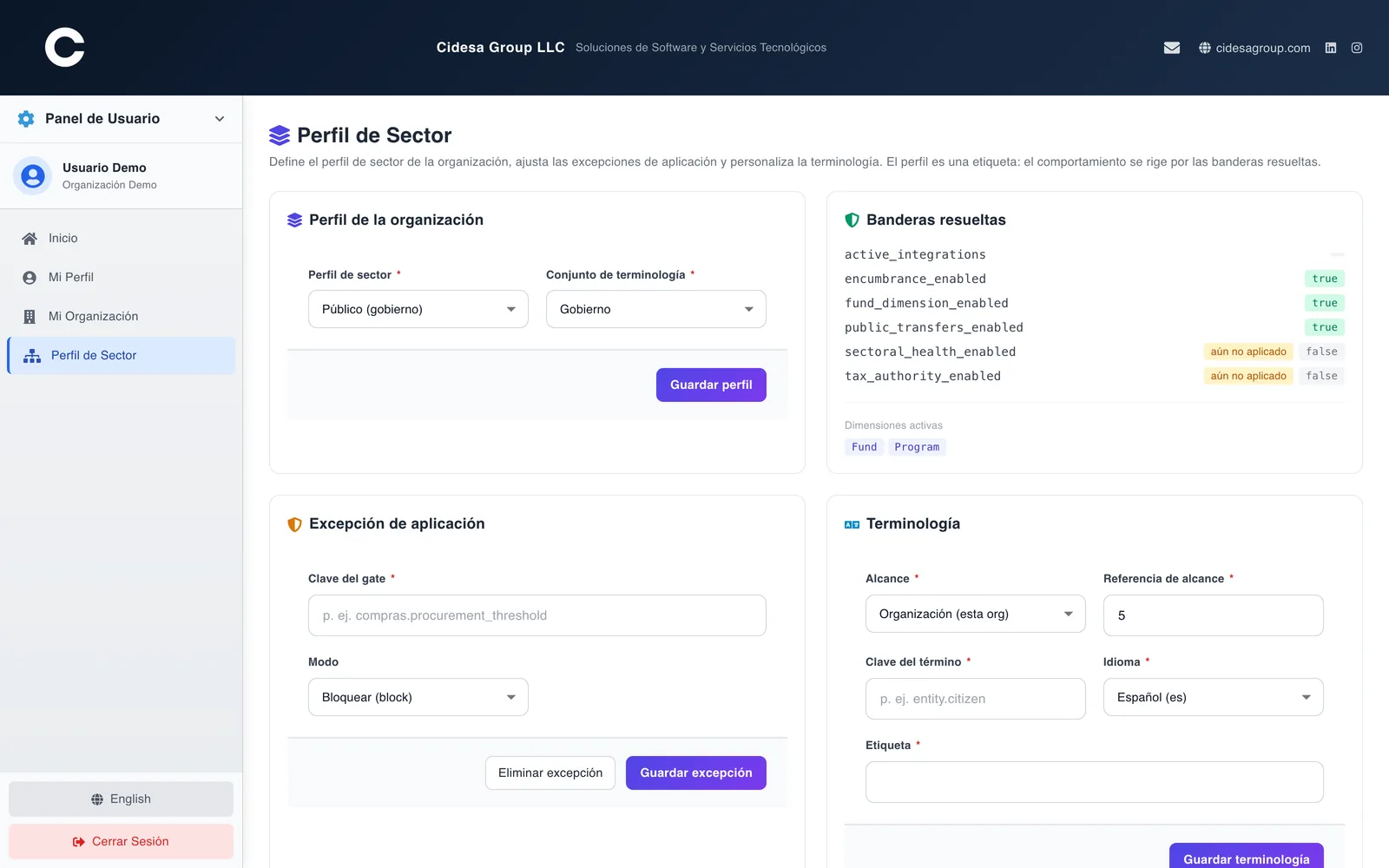
A public-sector profile, and the flags it resolves to. Switch the profile and these change — no module changes with them.
A tenant is configured with a sector profile, and the profile resolves a set of capability flags: how strictly budget availability is enforced, whether fund accounting and encumbrances are active, which procurement modalities apply, whether a tax authority function is in play, and which vocabulary the interface uses. Modules read the flags. They never branch on the sector itself — which is why adding a new sector or a new country later is a configuration exercise rather than a rewrite.
Public institutions
Budget law enforced as a hard control, fund and encumbrance accounting, statutory procurement modalities, oversight reporting, and the planning-to-execution chain from the operating plan down to the payment.
encumbrance_enabled = truefund_dimension_enabled = truebudget_control_mode = blocktax_authority_enabled = true
Private enterprise
Corporate chart of accounts, budget as management control rather than legal ceiling, commercial procurement, accounts receivable and billing, cost centres and multi-company consolidation.
encumbrance_enabled = falsefund_dimension_enabled = falsebudget_control_mode = warnterminology_set = corporate
The same platform, switched to private
Sixteen seconds. The sector profile changes from public to private and the product's vocabulary follows — «taxpayer» stops reading Contribuyente and starts reading Cliente. No module was rebuilt, no code branched; the modules read a flag.
This is the product
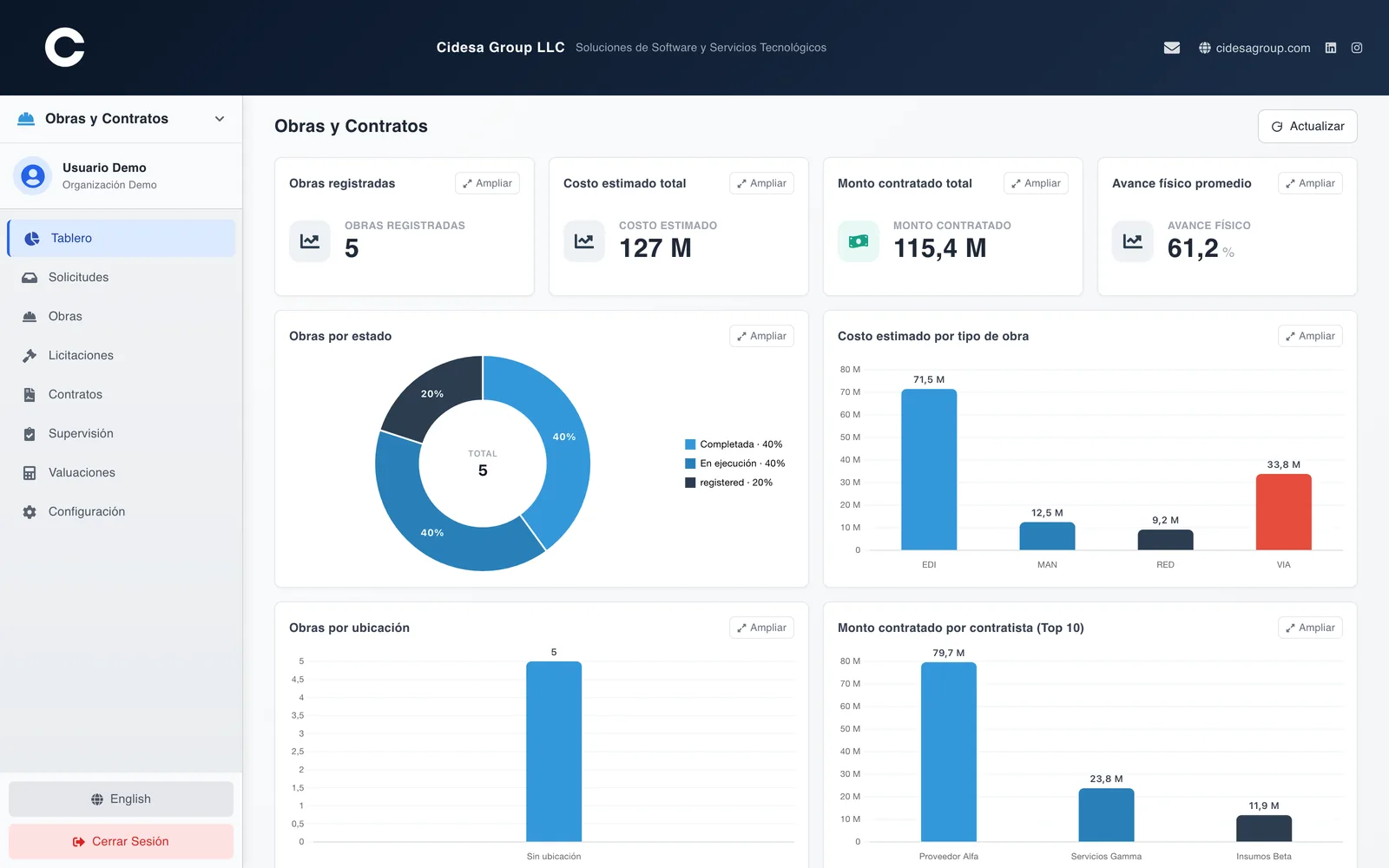
Not a mock-up and not a concept deck — screenshots of the running platform, on a demo tenant whose data is entirely invented.
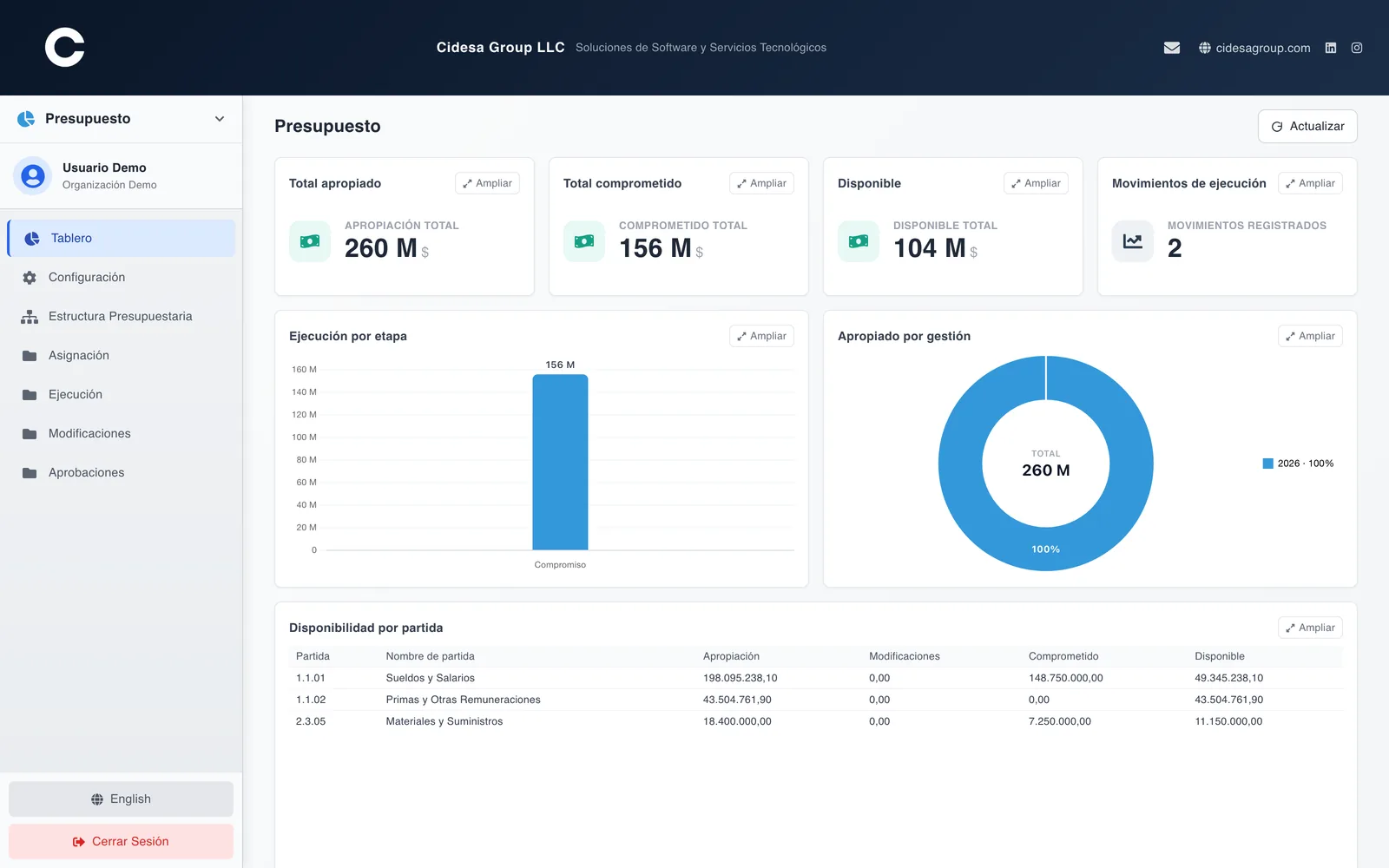
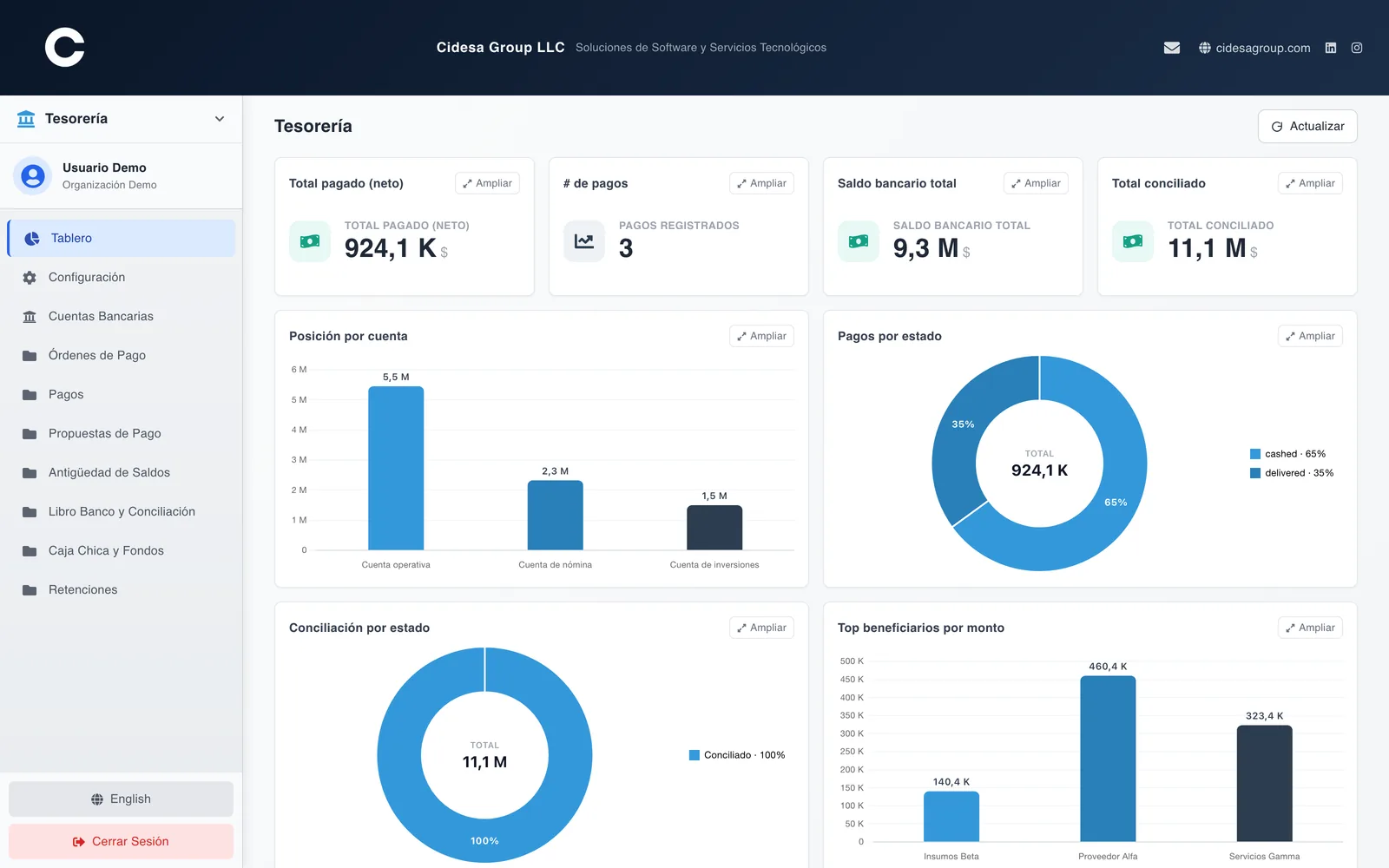
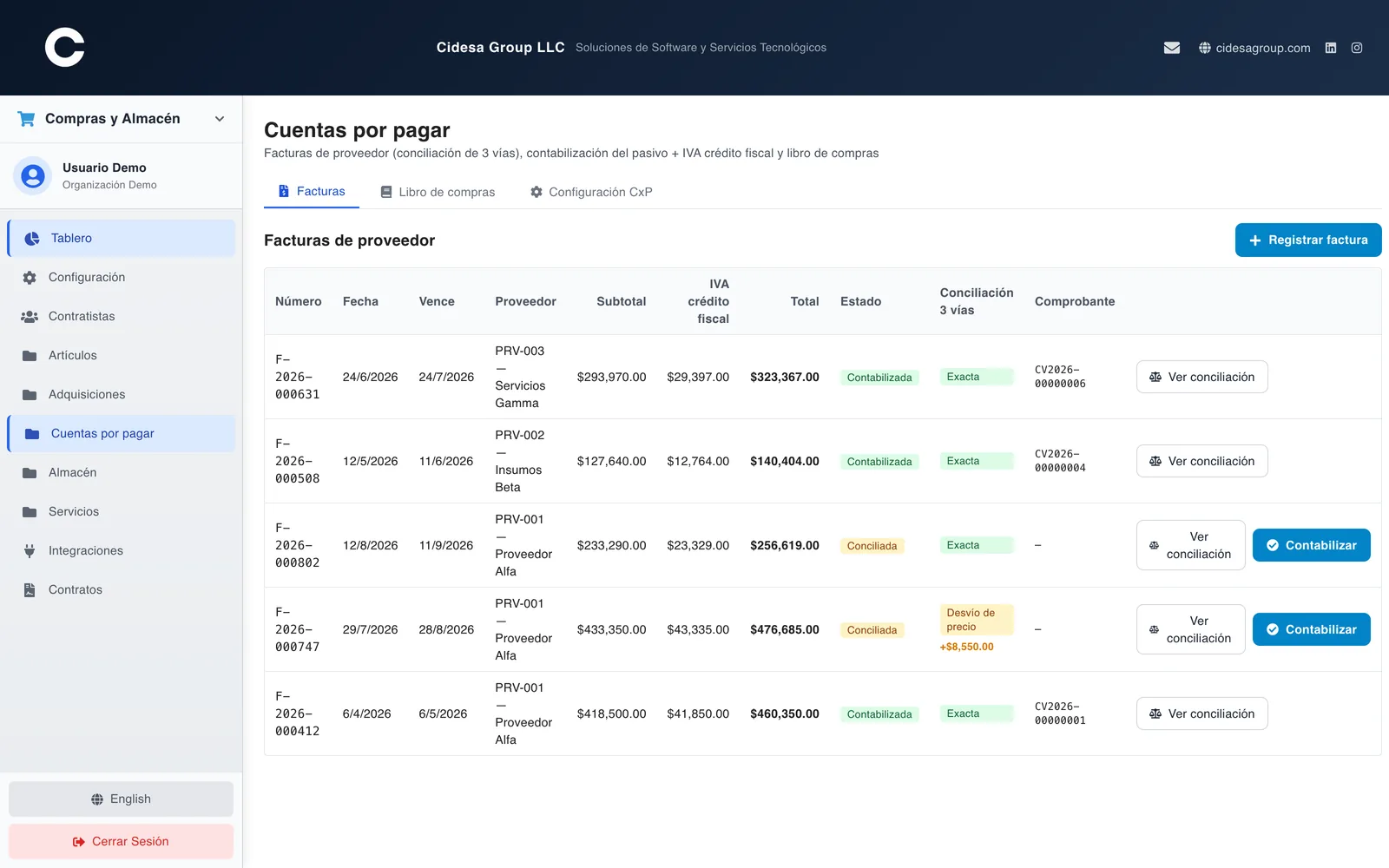
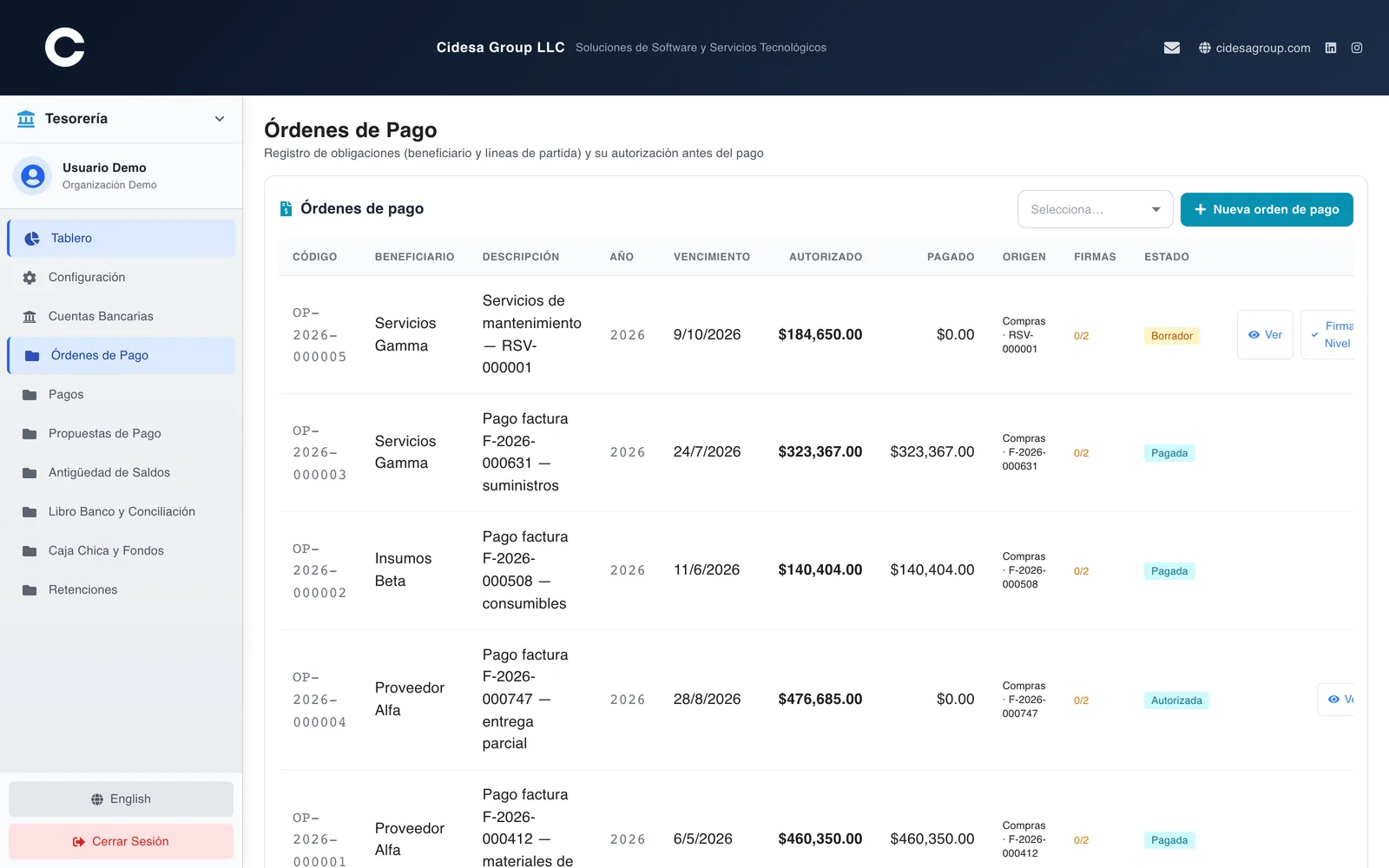
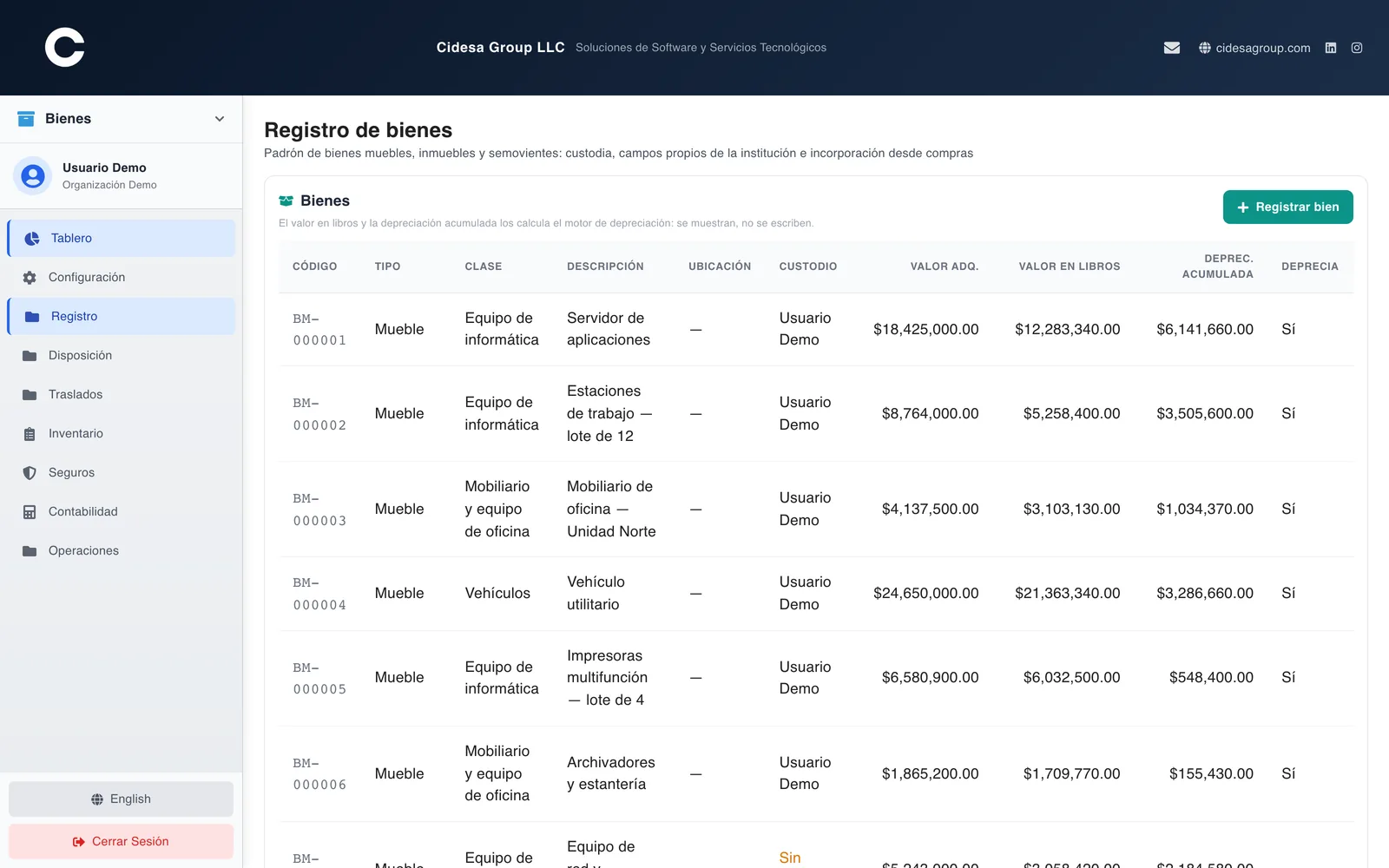
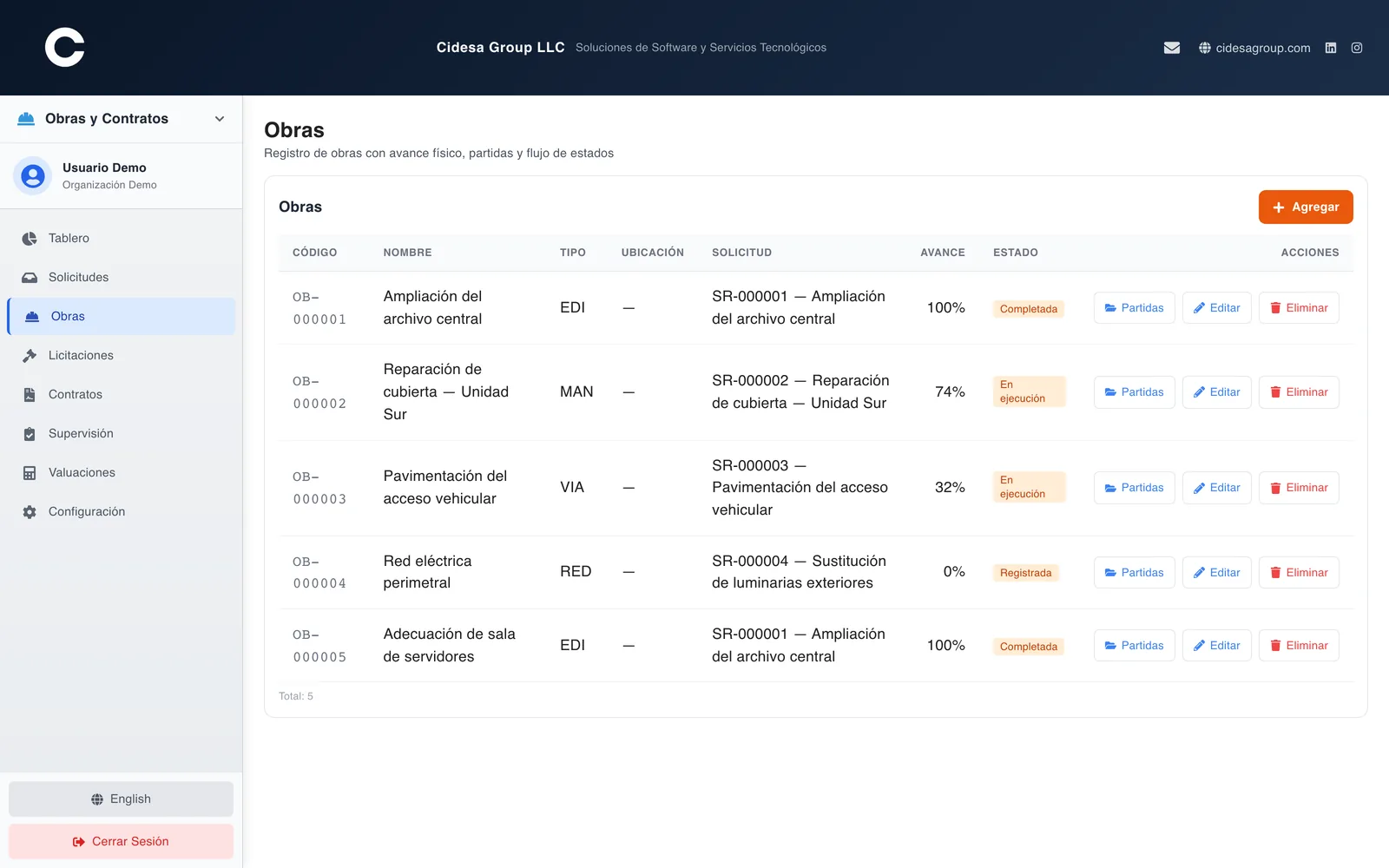
Budget execution: appropriation, commitment and availability, execution by stage, and per-line availability down to the individual budget item.
Eighteen modules. Look at any of them.
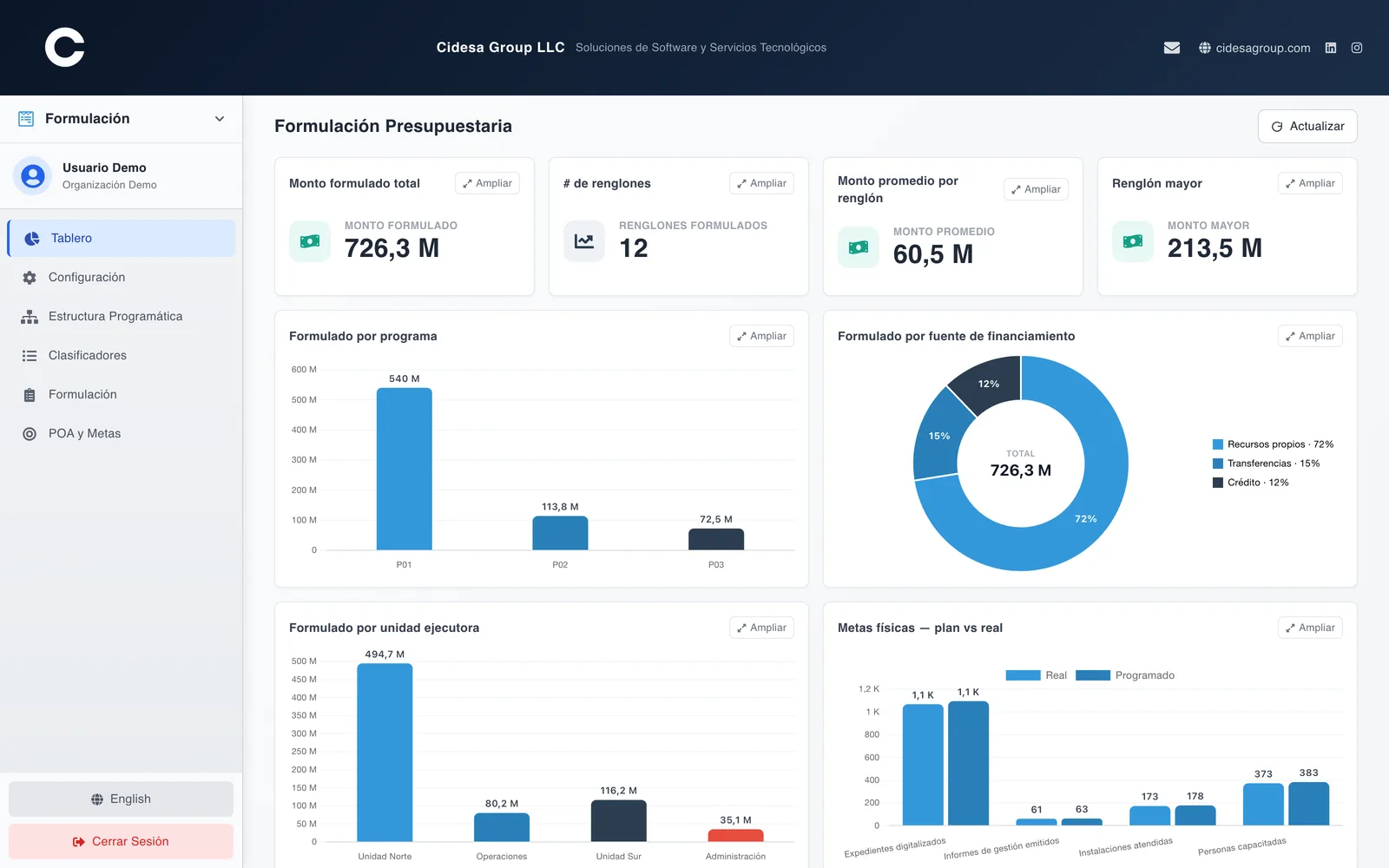
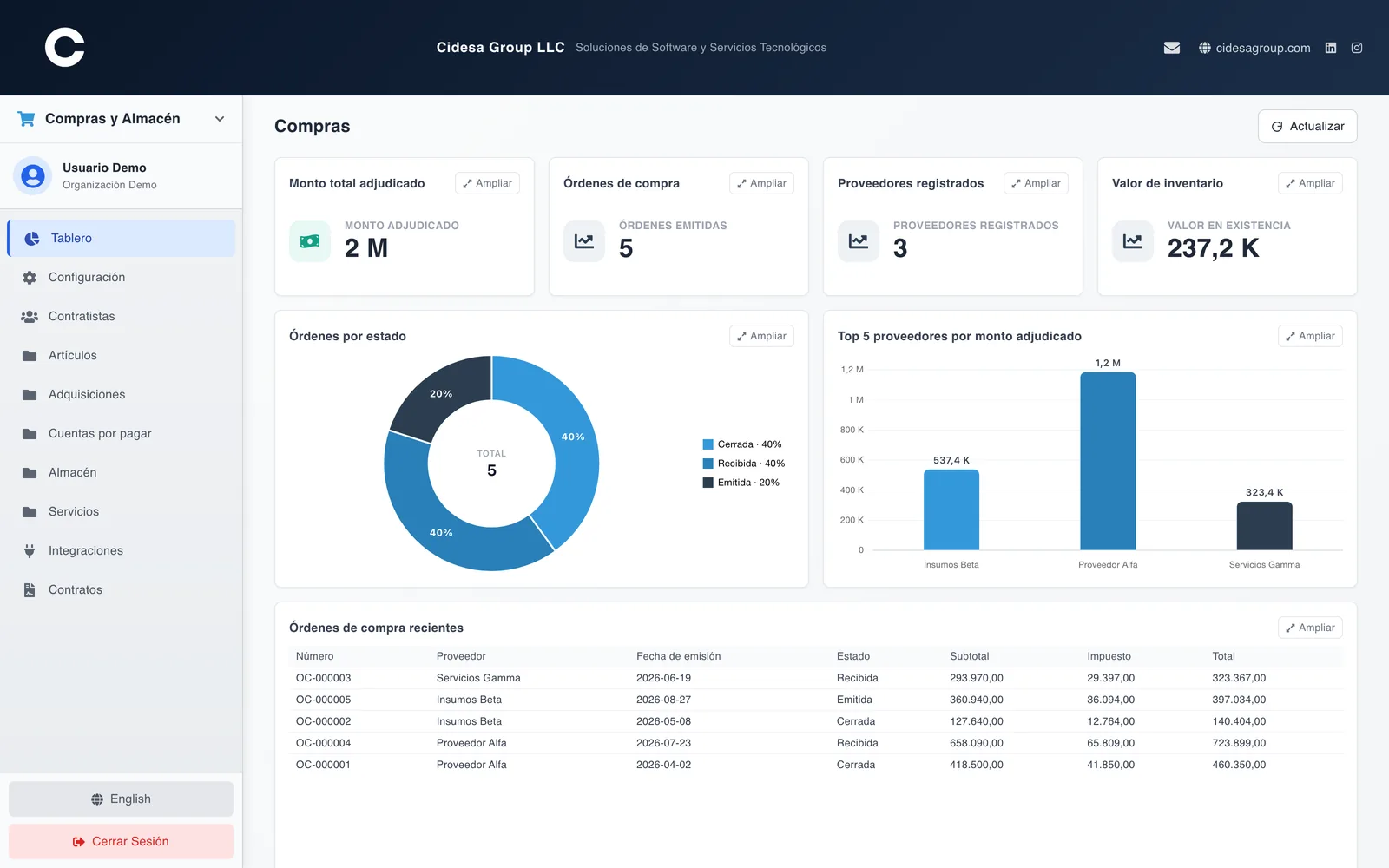
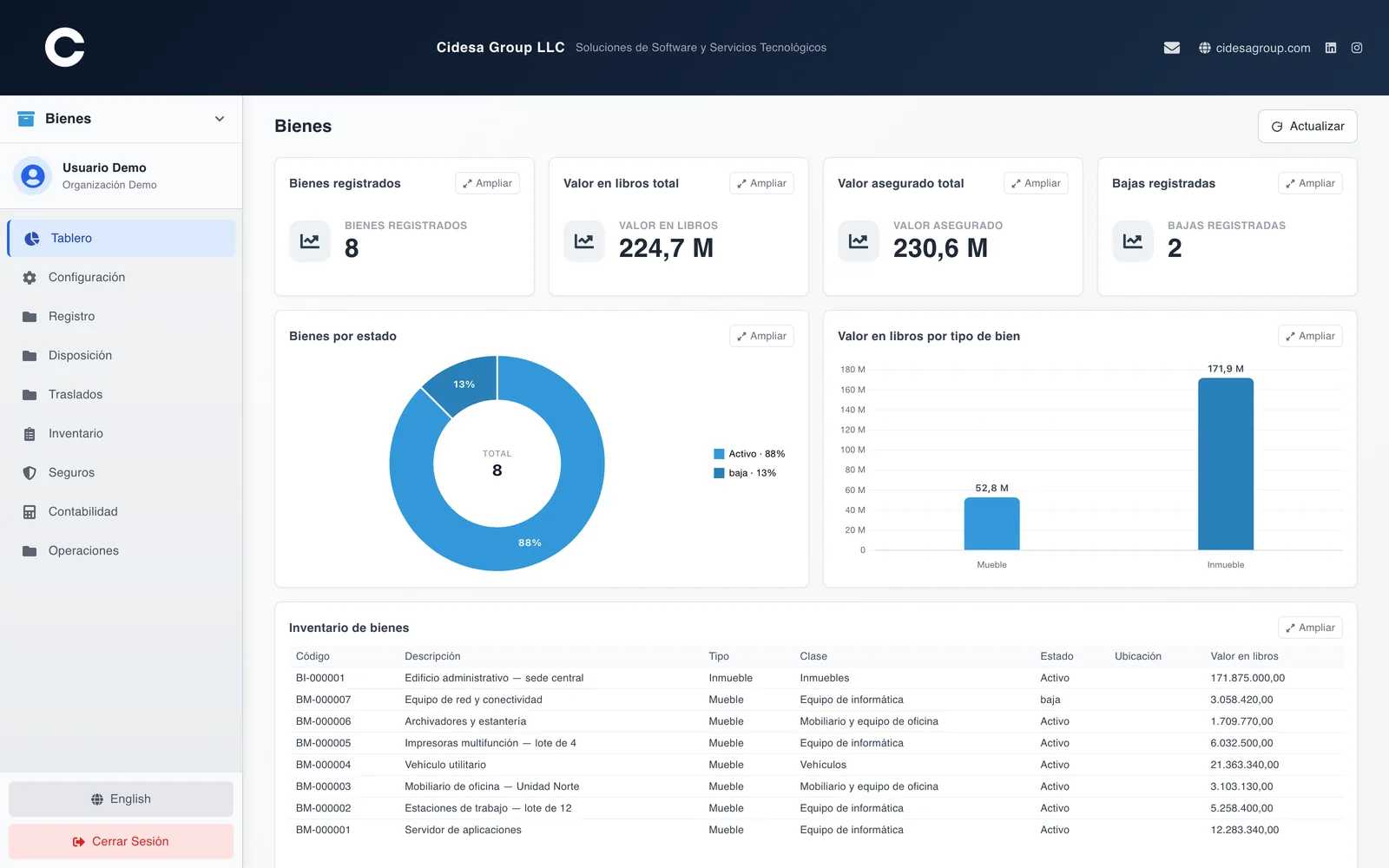
Not a feature list — the actual screens. Pick a module and it loads.
Browse by domain
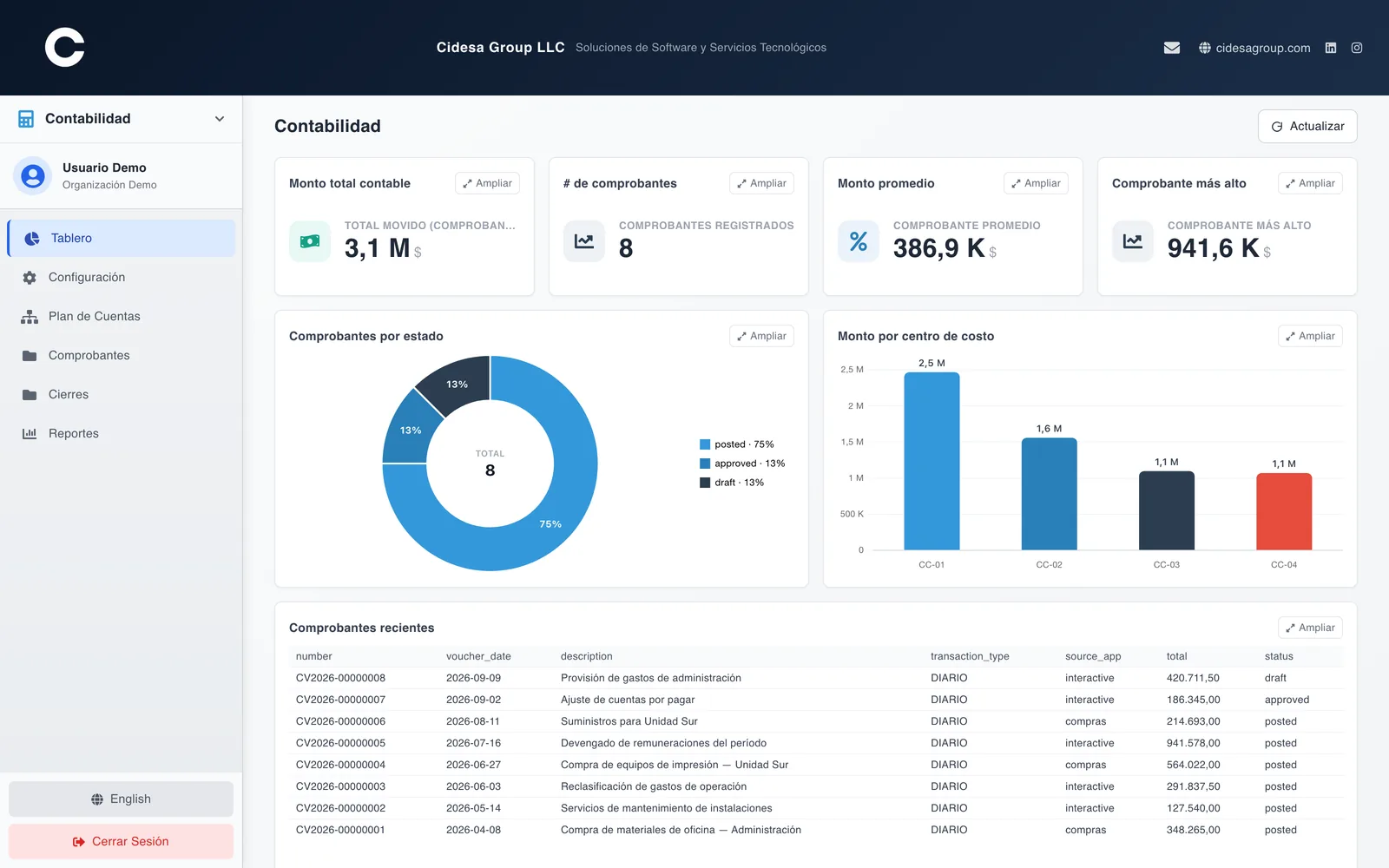
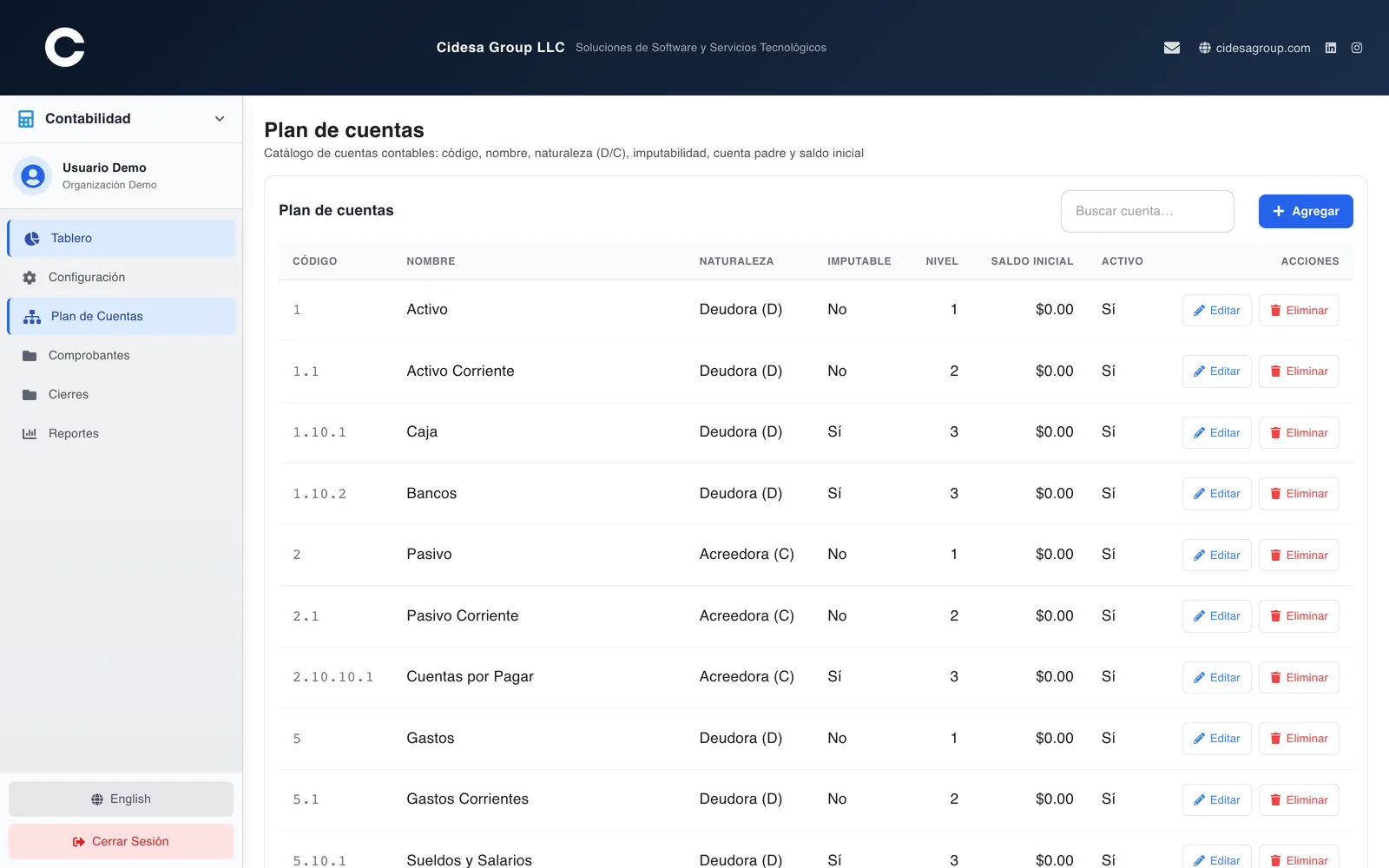
Contabilidad — Double-entry general ledger, chart of accounts, journals, closings and financial statements — the single book every other module posts into.
Security, isolation and auditability
Tenant isolation in the database
Separation between organizations is enforced at the data layer under dedicated database roles, so it holds even if application code is wrong. Application-level scoping alone was never good enough for us.
Identity and access
Single sign-on through your existing identity provider, permissions granular to the individual action rather than the screen, user groups, delegation, and per-application administration.
A complete audit trail
Every transaction carries who created it, who approved it, when, and against which budget line and accounting entry. Signature and approval history is retained with the document that carries it.
How it runs
Managed cloud
We operate it. You get an environment, an onboarding plan and a support line.
Your cloud
Deployed into your own cloud account, under your own security perimeter and policies.
On-premise
Container-based deployment inside your data centre, for institutions with data-residency or sovereignty requirements.
See it against your own processes.
A demo is more useful when it is running your chart of accounts and your approval flow. Tell us how you work and we will set it up that way.